
At 25, Vinicius Junior arrives at the 2026 World Cup as Brazil’s defining player. Can he close the gap between club brilliance and international expectation?
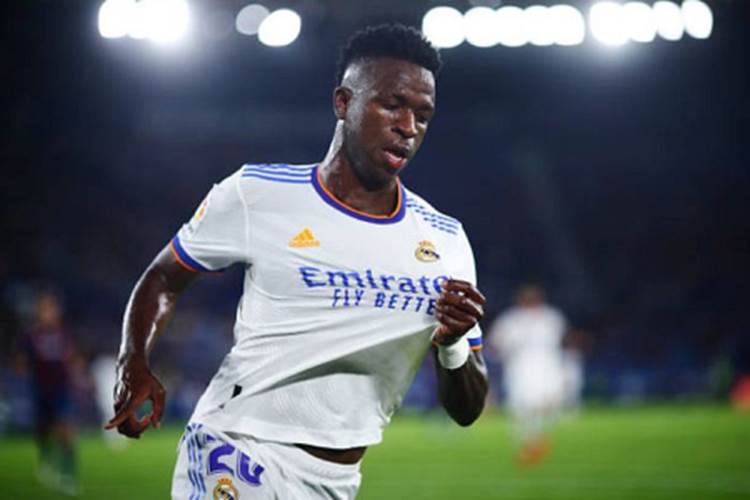
Vinicius Júnior (Real Madrid/Brazil)
At 25 years old, Vinicius Junior arrives at the 2026 FIFA World Cup as the player a nation of 215 million people is counting on most. No other player in this tournament carries a heavier burden relative to his age. He is the face of a Brazil squad that has not lifted the World Cup since 2002, the centerpiece of Carlo Ancelotti’s project, and the attacker who, on his best days, is as dangerous as anyone in world football. The question that hangs over him, and over Brazil, is whether he can finally translate that club brilliance into the international result that matters most.
A Career Built on Two Very Different Stages
Vinicius Paixão de Oliveira Junior was born on July 12, 2000, in São Gonçalo, Rio de Janeiro, and made his professional debut for Flamengo in 2017. By his 18th birthday, he had been sold to Real Madrid for €45 million, the second-largest transfer fee from the Brazilian league at the time, after Neymar. He scored seven goals in 37 appearances for Flamengo before departing for Spain, and the numbers that followed in La Liga were of an entirely different order.
At Real Madrid, Vinicius has established himself as one of the most complete forwards in world football. In the 2025–26 season, he recorded 22 goals and 9 assists across all competitions, including 16 La Liga goals from 36 starts. Those figures came after he had already guided the club to two UCL (UEFA Champions League) titles, contributing the winning goal in the 2021–22 final against Liverpool, and three La Liga crowns. In 2024, he won the FIFA Best Men’s Player award. By any measure, his seven seasons in Spain have confirmed a player operating at the very highest level of club football.
The International Gap That Defines the Debate
The figure that surfaces most in discussions about Vinicius before this tournament is not from his club career. It is 8 goals in 45 appearances for Brazil, a return considerably below what he consistently produces for Real Madrid. At club level in La Liga last season, he averaged 0.77 goal involvements per 90 minutes. For the Seleção, that figure sits at 0.4. The gap is real, documented, and sits at the center of every serious conversation about Brazil’s World Cup ambitions.
Vinicius has spoken about it openly. After Brazil’s 4-1 defeat to Argentina in a World Cup qualifier in March 2025, he cited the “weight of the jersey” when asked to explain the team’s performance. It was an honest self-assessment from a player who has never deflected from the difficulty of carrying national expectations. The collective around him at Real Madrid is elite and uniquely calibrated to his strengths; the international environment has not consistently replicated those conditions.
Ancelotti and the System Designed Around Him
Carlo Ancelotti became Brazil’s head coach in May 2025, taking on the role as the first foreign manager of the Seleção since 1925 and reuniting with the player he helped make into a world-class forward at Real Madrid. It was the Ancelotti–Vinicius relationship, established over years of shared success in Spain, that gave many Brazilians genuine reason to believe this cycle might be different.
Vinicius sealed Brazil’s qualification directly, scoring the only goal against Paraguay in June 2025 to confirm the Seleção’s place at the tournament. Speaking ahead of the 2026 finals, he described what the coach’s presence means: “His experience, background, and titles mean a lot.” He added that under Ancelotti’s guidance, he believes the team can have “an excellent World Cup and change Brazil’s history after so long without winning.” On tactics, he was specific, explaining that the team would “defend very well and try to hit on the counterattack. That’s what the coach always asks from us,” a notable departure from the expansive, possession-led style traditionally associated with the Seleção.
Brazil’s Group C and the Opening Test Against Morocco
Brazil’s campaign opens in Group C alongside Morocco, Haiti, and Scotland, a path that looks manageable on paper but carries a real opening test. The fixture against Morocco on June 13 has drawn the most attention from analysts ahead of matchday one.
| Date | Opponent | Venue |
| June 13 | Morocco | MetLife Stadium, East Rutherford, NJ |
| June 19 | Haiti | Lincoln Financial Field, Philadelphia |
| June 24 | Scotland | Hard Rock Stadium, Miami Gardens, FL |
Morocco are the most credible challenge in the group. The 2022 World Cup semi-finalists arrive under new head coach Mohamed Ouahbi, who replaced Walid Regragui in March 2026, with a qualifying record of eight wins from eight, 22 goals scored and just two conceded. Ancelotti confirmed his starting lineup for the opener and praised the attacking connection between Vinicius and Raphinha in the build-up. Brazil are expected to set up in a 4-3-3 with Vinicius on the left wing and Marquinhos captaining the defense.
The Weight of Expectation He Has Chosen to Carry
Ahead of the tournament, Vinicius gave a direct answer when asked whether Brazil should be considered favorites to win. “We are not the favorites based on the results we’ve had,” he said. “We want to arrive at the World Cup the same way we’re approaching the friendlies, calm, patient and focused on what we’ve been working on. We don’t want to be favorites, we want to put Brazil on top.”
For the Brasil vs Marrocos opener, the KTO Bet app has made available an Oddão+ market, a feature that combines selections at boosted odds, pairing Brasil – Resultado Final at 3.05 with Vinicius Junior – Sim – Marca at 3.46, a bet that places the Real Madrid winger at the center of the result, precisely where Ancelotti’s system intends to put him. The broader tournament market reflected his cautious public framing, with Brazil priced at +800 alongside Argentina, behind Spain (+400), England (+550), and France (+700) to win the title.
Raphinha, his attacking partner, has backed him without reservation. “Vinicius Junior can bring home the World Cup,” the Barcelona winger said from training camp, expressing full confidence that the two of them together can deliver Brazil’s sixth world title after the 24-year drought.
What This World Cup Represents
Vinicius has spoken about his own ceiling with an unusual directness for a player his age. “I’m the one everyone talks about now because I’ve had five or six positive seasons at Real Madrid and have already spent years among the best players in the world,” he said before the tournament. “That naturally brings more responsibility. And that’s the responsibility I want, because I know I can do more, improve, keep evolving, and I know where I can reach because my ceiling is always very high.”
At 25, competing in his first tournament as the unambiguous focal point of one of the sport’s most decorated squads, Vinicius arrives at exactly the right age for a moment of this kind. He knows Ancelotti’s methods intimately, has the squad depth around him to carry some of the load, and has declared in terms that leave no room for ambiguity that he will not be shrinking from what is being asked. When Brazil take the field against Morocco at MetLife Stadium on June 13, the eyes of a football-mad continent will be on the winger from São Gonçalo who has conquered European football at its highest level and is now coming for its grandest stage.