The Golden Ball is the most prestigious individual award at a World Cup, rewarding not just goals but influence, consistency, and the capacity to shape a tournament across multiple rounds.
With World Cup 2026 odds already reflecting the leading contenders, the race for the award promises to be one of the most compelling storylines of the summer.
Here are the five players most likely to be holding the trophy on 19 July.
Harry Kane
Kane arrives at the World Cup as European Golden Shoe winner for the third consecutive season, having scored 36 Bundesliga goals in 2025-26 and finished the campaign with a hat-trick in the DFB Pokal final against Stuttgart.
He is the focal point of an England attack that will need him at his very best to compete in the knockout rounds, and his combination of goals, hold-up play, and leadership gives the Three Lions a profile that few other nations can match through their striker.
No player has ever won multiple Golden Boots at a World Cup. If Kane does so, the Golden Ball conversation becomes very straightforward indeed.
Lamine Yamal
The most exciting player at his first World Cup and the one most likely to produce the moments that define a tournament in the popular imagination. Yamal won the Young Player of the Tournament award at Euro 2024, and the World Cup represents the natural next stage.
He arrives carrying a hamstring injury that has kept him out since April, though Spain’s coaching staff and manager Luis de la Fuente have confirmed he is expected to be fit for the tournament. The plan is to manage his minutes carefully in the group stage before unleashing him fully in the knockout rounds.
If Spain go all the way, as most models predict, Yamal will have been central to it. The Golden Ball often follows the best player on the winning team.
Michael Olise
The most statistically dominant player in European football this season, and arguably the most underrated name on this list. Olise finished the Bundesliga campaign with 15 goals and 19 assists in 32 appearances, the second-highest assist total across Europe’s top five leagues and the 12th most goal contributions in Bundesliga history with 34.
He has established himself firmly in the France starting 11 with 15 caps and four international goals, and Deschamps will deploy him alongside Mbappe and Dembele in one of the most frightening attacking units at the tournament.
The 24-year-old’s ability to beat defenders in tight spaces, deliver final-ball quality at pace, and contribute in both halves of the pitch gives France a dimension that no other team possesses. A strong tournament from France would almost certainly come with Olise’s fingerprints all over it.
Kylian Mbappe
The player who scored a hat-trick in a World Cup final and still ended up on the losing side will be motivated by unfinished business in North America. Mbappe scored 43 goals in all competitions for Real Madrid this season and remains the most technically complete attacker on the planet at 27.
His 2022 Golden Ball case was undermined by France’s defeat on penalties. In 2026, with a squad that many consider their strongest in years, the opportunity to add the team prize to the individual one is entirely realistic.
Whether France’s depth works against him in terms of shared attacking responsibility, or whether the scale of his individual performances carries him above the rest, will define his Golden Ball candidacy.
Lionel Messi
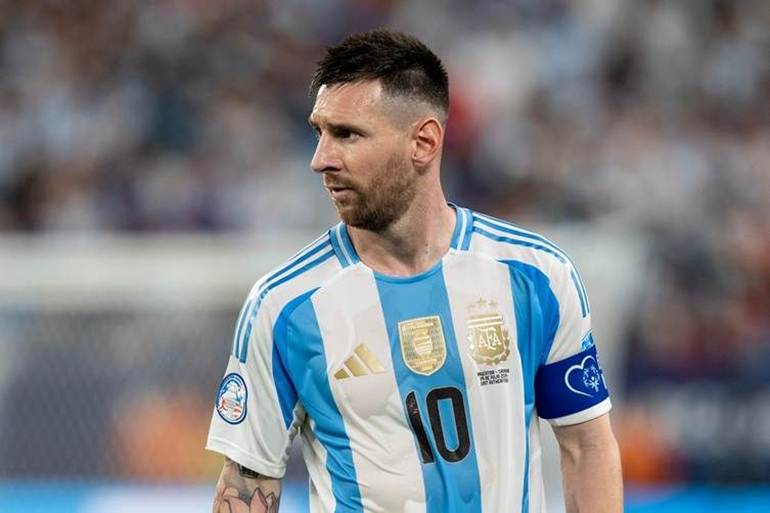
The World Cup Predictor 2026 can model group stage probabilities and knockout routes, but it cannot fully account for Messi’s capacity to produce moments of genius that no data anticipates. He arrives at his sixth and final World Cup at 38, with a hamstring concern that has unsettled Argentina’s preparations, though Scaloni has moved to calm fears about his fitness.
He has won the Golden Ball at two World Cups, in 2014 controversially and 2022 deservedly, and the emotional weight of a farewell tournament in front of North American crowds who have watched him transform MLS over the past three years adds an extra dimension to his campaign.
The body may no longer allow what it once did across seven consecutive matches. But Messi at a World Cup has never been about statistics. It has always been about moments. One more could be enough.