Real Madrid is once again the world’s most valuable football club in 2026. That part is hardly shocking. What does stand out is who sits right behind them.
According to Forbes, Real Madrid tops the latest ranking at $6.75 billion, marking the fourth straight year the Spanish club has finished in first place. The bigger surprise is Manchester United, who came in second at $6.6 billion despite a miserable season that saw them slump to 15th in the Premier League and lose the Europa League final.
That contrast says a lot about modern football. Success still matters, of course, but club value now depends on far more than trophies. Brand power, commercial deals, stadium income, and global reach all play a huge role in shaping these rankings.
Real Madrid stays on top
Real Madrid’s place at the top feels fully deserved. Forbes puts the club’s annual revenue at $1.13 billion, a remarkable number that makes Madrid only the second sports team in the world to cross the $1 billion mark in revenue. The first was the NFL’s Dallas Cowboys.
There are a few obvious reasons why Real Madrid keeps pulling away financially.
The first is simple: they keep winning. Success in the Champions League does more than add another trophy to the cabinet. It brings prize money, keeps the club in the spotlight, and strengthens its appeal to sponsors and supporters around the world.
Then there is the Santiago Bernabéu. The stadium redevelopment has become a major business advantage. Elite stadiums are no longer just places to play matches. They are year-round assets that generate money through events, hospitality, premium seating, and commercial partnerships. Real Madrid has turned its ground into a serious revenue machine.
The club’s global popularity also gives it a massive edge. Few football brands have the same reach. That matters when it comes to sponsorships, merchandise, and media value. For platforms like Reveryplay, this is the clearest example of how football success and smart business planning can work hand in hand.
Manchester United finishes second, which says a lot
The strangest part of the ranking is definitely Manchester United in second place.
On the pitch, their season was dreadful. A 15th-place finish in the Premier League is nowhere near acceptable for a club of that size, and losing the Europa League final only made it worse. Normally, a season like that would suggest decline across the board.
And yet United is still valued at $6.6 billion, with revenue of $834 million.
That tells you everything about the power of the club’s brand. Manchester United remains one of the most recognizable names in world sport, not just football. Decades of success, massive international support, and an enormous commercial operation still give them extraordinary value, even when the football itself is poor.
It also shows how disconnected club valuation can be from current form. A bad season can damage prestige, but it does not erase global fan interest, sponsorship deals, or long-established commercial strength. That is why United can be one of the season’s biggest losers on the pitch and still rank above clubs that performed much better.
Barcelona rounds out the top three
In third place is Barcelona, valued at $5.65 billion with annual revenue of $821 million.
Barcelona’s position near the top is no surprise either. Even through financial turmoil, the club has remained one of the biggest and most commercially attractive names in football. Very few clubs in the world can match its history, fanbase, and identity.
That kind of status matters. Even in difficult periods, a club with Barcelona’s reputation can still generate huge revenue because the brand is so strong. This ranking reflects that.
The Premier League dominates the wider list
Real Madrid may be number one, but the full ranking underlines just how financially powerful the Premier League has become.
A total of 12 Premier League clubs appear in the top 30, more than any other league by a wide margin. That says plenty on its own. English football’s broadcast income, worldwide exposure, and commercial strength continue to give its clubs a major advantage.
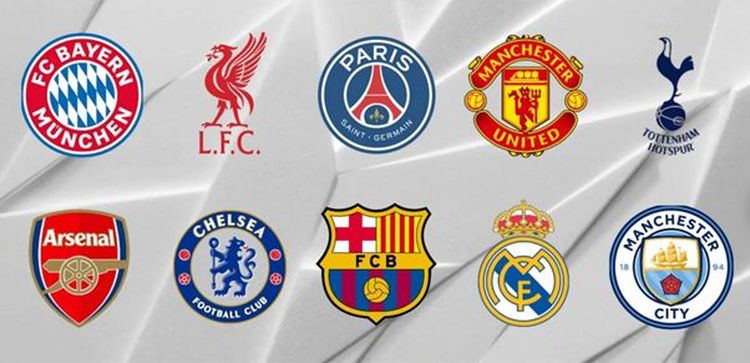
Liverpool is fourth at $5.4 billion, followed by Manchester City at $5.3 billion. Arsenal, Tottenham, and Chelsea all make the top 10 as well. Further down the list, clubs such as West Ham, Newcastle United, Aston Villa, Brighton, Fulham, and Crystal Palace show just how deep the league’s financial strength has become.
This is not just about the traditional giants anymore. The Premier League has built an environment where even clubs outside the title race can develop into highly valuable global assets.
MLS is growing too
European clubs still dominate the ranking, but MLS also makes a strong showing.
The list includes eight MLS clubs, highlighting the growing financial strength of the league. The highest-ranked is Los Angeles FC, which sits in 15th place at $1.25 billion. Inter Miami follows at $1.2 billion, which is hardly surprising given the attention the club has attracted in recent years.
Other MLS sides in the ranking include LA Galaxy, Atlanta United, New York City FC, Austin FC, Seattle Sounders, and D.C. United.
These clubs are valued differently from Europe’s traditional giants. Their appeal is tied more closely to market size, ownership value, growth potential, and the rising popularity of football in North America. It is a different model, but clearly an increasingly valuable one.
The 30 most valuable football clubs in 2026
Here is the full Forbes ranking:
- Real Madrid — $6.75 billion ($1.13 billion revenue)
- Manchester United — $6.6 billion ($834 million)
- Barcelona — $5.65 billion ($821 million)
- Liverpool — $5.4 billion ($773 million)
- Manchester City — $5.3 billion ($901 million)
- Bayern Munich — $5.1 billion ($827 million)
- Paris Saint-Germain — $4.6 billion ($870 million)
- Arsenal — $3.4 billion ($771 million)
- Tottenham Hotspur — $3.3 billion ($666 million)
- Chelsea — $3.25 billion ($591 million)
- Juventus — $2.15 billion ($389 million)
- Borussia Dortmund — $2.05 billion ($555 million)
- Atlético Madrid — $1.7 billion ($442 million)
- AC Milan — $1.5 billion ($433 million)
- Los Angeles FC — $1.25 billion ($150 million)
- Inter Miami — $1.2 billion ($180 million)
- Inter Milan — $1.15 billion ($430 million)
- West Ham United — $1.125 billion ($349 million)
- Newcastle United — $1.1 billion ($403 million)
- LA Galaxy — $1 billion ($95 million)
- Atlanta United — $900 million ($105 million)
- Aston Villa — $875 million ($343 million)
- New York City FC — $860 million ($78 million)
- Brighton & Hove Albion — $850 million ($280 million)
- Fulham — $825 million ($229 million)
- Austin FC — $810 million ($90 million)
- AS Roma — $800 million ($273 million)
- Seattle Sounders — $790 million ($83 million)
- Crystal Palace — $785 million ($221 million)
- D.C. United — $785 million ($90 million)
What this ranking really shows
Taken together, these 30 clubs are worth more than $72 billion, with an average valuation of $2.4 billion. That is 5% higher than in 2024, which shows that elite football remains a huge business even in an era of constant financial pressure and change.
The bigger takeaway, though, is how these values are built.
Winning still matters, but it is no longer the whole story. Clubs grow in value through broadcast deals, sponsorships, global fan engagement, stadium income, and long-term brand strength. That is why Real Madrid stays on top. It is also why Manchester United can have a disastrous year and still sit in second place.
Final thought
There is something almost absurd about a club having one of its worst seasons in years and still being named the second most valuable in the world. But that is where football is now. Prestige lasts. Scale matters. And once a club becomes a global brand, it can survive far more than a bad league finish.
Real Madrid remains the benchmark. Manchester United remains a financial giant despite the chaos. Barcelona is still right there. The Premier League keeps flooding the list. MLS keeps growing.
That is the real story behind the numbers.