
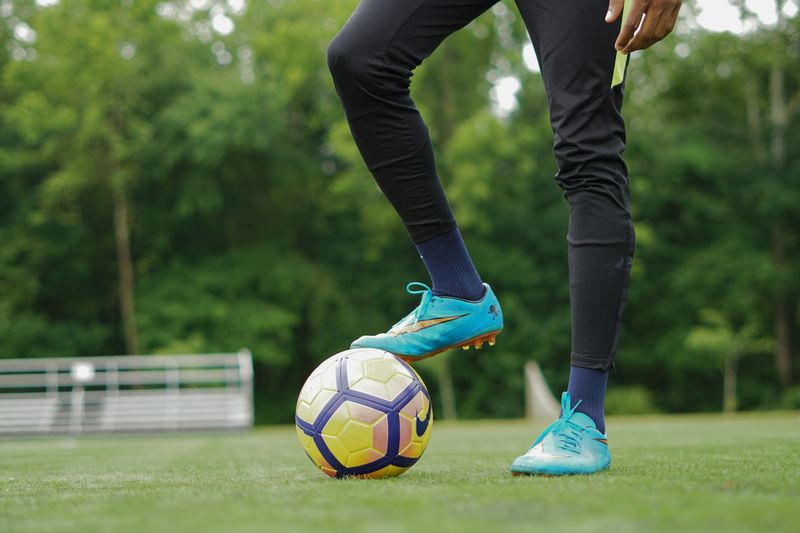
Penalty shootouts remain the most psychologically intense moment in football. A player walks twelve yards from goal, the crowd goes silent, and everything comes down to a single decision: where to kick, and when. For the goalkeeper, it is the mirror image of the same problem. Dive left, dive right, or stay in the center.
What most fans watching at home do not realize is that this decision is not random. It is not pure instinct. And it is not just about technique. Over the past decade, football analysts and behavioral researchers have discovered that penalty shootouts follow the same mathematical patterns found in one of the simplest games on earth. The mixed strategy logic that governs a rock paper scissors game is the exact same framework that researchers now use to study how penalty takers and goalkeepers make decisions under pressure. According to data tracked by football analytics platforms, understanding this connection is changing how clubs prepare for knockout tournaments in 2026.
Penalties Are a Zero-Sum Game
In game theory, a zero sum game is a situation where one side’s gain is exactly equal to the other side’s loss. There is no outcome where both sides win. There is no negotiation. There is only one winner and one loser.
A penalty kick is a textbook example. If the kicker scores, the goalkeeper loses. If the goalkeeper saves, the kicker loses. There is no middle ground and no cooperation. This makes penalty kicks structurally identical to simple strategic games where two players choose simultaneously and one player wins based on whether the choices match or conflict.
Professor Leighton Vaughan Williams, a leading researcher in game theory applications, has written extensively about this parallel. In his 2025 analysis of mixed strategy methods, he explained that penalty kicks, like other zero sum games, have no dominant strategy. There is no single direction a kicker can always aim that guarantees success, because the goalkeeper can adapt. And there is no single direction a goalkeeper can always dive that guarantees a save, because the kicker can adapt.
The optimal solution, according to Nash Equilibrium theory, is randomization. Both the kicker and the goalkeeper should vary their choices in unpredictable patterns so that neither side can gain an advantage by reading the other. The moment one player becomes predictable, the other player can exploit that pattern.
Why Players Do Not Shoot Down the Middle
Here is a fact that frustrates statisticians and excites game theorists: goalkeepers dive left or right on nearly every penalty. They almost never stay in the center. This means that a kick aimed at the middle of the goal has a very high probability of going in, because there is simply nobody there to stop it.
And yet, kickers rarely shoot down the middle.
The mathematics publication Plus Maths explored this phenomenon in detail and found that the explanation comes from behavioral economics rather than pure statistics. If a kicker shoots to the side and the goalkeeper saves it, the kicker can point to bad luck or a good guess by the goalkeeper. The failure feels tolerable. But if a kicker shoots down the middle and the goalkeeper stays put, the kicker looks foolish. The ball rolls gently into the goalkeeper’s arms, and the player has to walk back to the halfway line knowing that sixty thousand people are questioning their intelligence.
This is what behavioral scientists call minimax regret. Players do not optimize for the highest probability of scoring. They optimize for the outcome that produces the least embarrassment if it fails. The result is a systematic bias away from the center of the goal, even though the data says the center is the best place to aim.
Bruno Fernandes of Manchester United is one of the few elite penalty takers who regularly uses the center of the goal. His penalty record reflects the statistical advantage: by mixing center, left, and right targets unpredictably, he keeps goalkeepers guessing in a way that players who only use the corners cannot.
The Mixed Strategy Connection
The reason researchers keep returning to simple strategic games when studying penalties is that the mathematical structure is identical.
In a classic two player simultaneous choice game, each player picks from a set of options without knowing what the other player will choose. The outcome depends on the combination. If you always make the same choice, your opponent will figure it out and beat you. The only way to prevent exploitation is to vary your choices randomly, with specific probabilities that depend on the payoffs involved.
A penalty kick works the same way. The kicker picks a direction. The goalkeeper picks a direction. They choose simultaneously (the goalkeeper commits before the ball arrives). If the goalkeeper guesses correctly, the chance of a save goes up dramatically. If the goalkeeper guesses wrong, the kicker has an open goal.
Research published in the American Economic Review by economists Ignacio Palacios-Huerta and Oscar Volij examined thousands of professional penalty kicks and found that elite kickers and goalkeepers do approximate mixed strategy Nash Equilibrium over time. Their choices are not perfectly random, but they are close enough that neither side has a consistent exploitable advantage.
However, the study also found that deviations from optimal randomization are more common in high pressure situations. In World Cup shootouts, players are more likely to fall into predictable patterns because stress reduces cognitive flexibility. The brain defaults to habits rather than generating truly random choices.
What the Data Says About Modern Penalty Trends
Football analytics has advanced rapidly since the early game theory studies. In 2026, clubs preparing for knockout competitions have access to detailed data on every penalty a player has ever taken, including direction, height, run up speed, and even eye movement before the kick.
Here are some patterns that have emerged from recent data:
Right-footed kickers favor the left side of the goal (from the goalkeeper’s perspective) approximately 40% of the time. Left footed kickers show the opposite bias. These natural tendencies create exploitable patterns that goalkeepers and their analysts study extensively.
Goalkeepers who delay their dive by even 200 milliseconds improve their save rate measurably. The traditional approach of committing early to a side is giving way to a more patient strategy where the goalkeeper waits for the kicker to reveal their intention through body movement.
Stuttered run ups, popularized by players like Jorginho, reduce the kicker’s accuracy by introducing an additional decision point. The kicker must decide not only where to aim but when to strike, and the cognitive load of managing both decisions simultaneously leads to a measurable increase in missed penalties.
The sequence effect is also well documented. Players who take penalties later in a shootout (the fourth or fifth kick) face significantly higher pressure than those who take the first kick. Studies show that conversion rates drop by roughly 5 to 8 percentage points from the first penalty to the fifth, even controlling for player quality.
How Clubs Are Preparing Differently
The application of game theory and behavioral science to penalty preparation has moved from academic papers into actual training ground practice at the highest level.
Several Premier League and Champions League clubs now employ specialist analysts who study penalty data full time. These analysts build profiles of opposing goalkeepers that include their dive tendencies, reaction times, and how their behavior changes under pressure.
Some clubs have introduced randomization tools into their penalty preparation. Rather than having a player decide where to shoot in the moment, the coaching staff assigns a predetermined sequence of directions based on optimal mixed strategy calculations against the opposing goalkeeper’s profile. The player does not have to think about where to aim during the walk from the halfway line. They already know.
This removes the psychological burden of decision making under extreme stress. It also prevents the kicker from being influenced by what happened on previous kicks in the shootout. If the player ahead of you just missed to the right, human instinct says to avoid the right. But that instinct creates exactly the kind of predictable pattern that an alert goalkeeper can exploit.
England’s penalty shootout improvement over the past several years has been partially attributed to this kind of structured preparation. After decades of tournament heartbreak, the team’s approach to shootouts shifted from “leave it to the players in the moment” to a systematic, data driven process that treats penalties as the strategic decision problem they actually are.
The Psychology of Going First
One of the most studied questions in football analytics is whether the team that shoots first in a penalty shootout has an advantage. The data says yes, although the size of the advantage is debated.
A widely cited study by economists Apesteguia and Palacios Huerta found that the team shooting first wins approximately 60% of the time. The explanation is psychological: the team shooting second is always playing from behind or at best level. They never have the lead. This creates constant pressure to match, rather than the freedom of building a lead.
In response to this research, football’s rule-making body IFAB experimented with an ABBA format (similar to a tennis tiebreak) where the order alternates after the first kick to reduce the first-mover advantage. The experiment was trialled in some competitions but was ultimately not adopted widely, partly because it confused players and fans.
The current format remains ABAB, and the coin toss before a shootout is therefore one of the most consequential moments in any knockout match. Teams that win the toss and choose to go first are making a statistically informed decision, even if many captains make the choice based on gut feeling.
What This Means for the 2026 Season
With the 2026 Champions League knockout rounds approaching and multiple major international tournaments on the horizon, penalty shootout preparation will be more data driven than at any point in football history.
The clubs that will have the edge are the ones treating penalties as what they actually are: a structured strategic problem with known mathematics, identifiable patterns, and exploitable biases. The clubs that continue to treat penalties as pure nerve and hope will keep losing them at the same rate they always have.
Game theory will not eliminate the uncertainty. A football is not a perfectly controlled object. Wind, pitch conditions, fatigue, and a thousand other variables mean that even the best preparation cannot guarantee a specific outcome. But over the course of a season, over the course of a tournament, the teams that play the probabilities correctly will come out ahead.
The twelve yard walk will always feel like the loneliest moment in football. But in 2026, the smartest players are not walking alone. They have the data, the preparation, and the mathematics walking with them.