
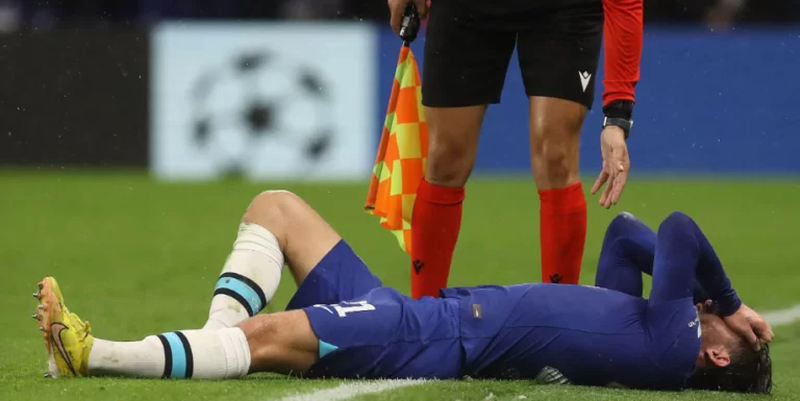
The English Premier League is arguably one of the best-supported tournaments in the world, and many factors influence how teams perform throughout the season. One of the biggest negative influences on teams is injury. When a key player gets injured, it can affect the whole team and their season. Here’s how.
The scale of the problem
The Premier League launched in 1992 and has evolved into the most-watched football competition on the planet. That growth has come with a significant increase in the physical demands placed on players.
Research into injury patterns across English professional football shows that match injuries are far more common than training injuries, occurring at roughly six times the rate per hour of exposure. The most common issues are lower-body muscle strains, with hamstring injuries in particular becoming more frequent and more severe over recent decades.
During the 2020/21 season alone, over 400 injuries were reported across the league. Players spent an average of 20 days on the sidelines per injury, up from around 14 days just a couple of seasons earlier. Those numbers reflect a real shift in the problem.
Why are injuries getting worse?
The most commonly cited reason for rising injury rates is fixture congestion. Premier League clubs juggle domestic league games, cup competitions, and European commitments across a packed calendar that leaves little time for recovery between matches. When the schedule compresses, players carry accumulated fatigue into each game, and the risk of soft tissue injuries rises accordingly.
Modern tactics have also played a role. Teams press harder, sprint more frequently, and change direction faster than they did a decade ago. That intensity places a significant load on muscles and tendons, particularly during the early weeks of a season when players are still building their match fitness after pre-season.
International commitments add another layer of difficulty. Players returning late from summer tournaments or travelling across the world for international duty often come back to their clubs with disrupted conditioning programs and not enough time to properly prepare before the domestic season resumes.
How injuries change a season
The impact of losing a key player runs much deeper than just one result. When a central defender or a creative midfielder is sidelined for weeks or months, it forces tactical adjustments, disrupts team chemistry, and places extra physical demands on those covering the absent player.
Liverpool’s 2020/21 season is the most frequently cited example of this. When Virgil van Dijk suffered a serious knee injury, the defensive structure that had carried them to the title the previous year fell apart. They conceded far more goals in the games that followed and ultimately finished well short of their expected position on the table. One injury, one player, and the entire season shifted.
Arsenal have faced similar challenges in recent years. Despite building one of the deepest squads in the league, they have consistently struggled to maintain defensive solidity when Gabriel has been unavailable. The Brazilian has been involved in more aerial duels than any other Arsenal player in recent seasons, and his absence has led to a notable drop in clean sheets and points.
What this means for the title race
Injuries rarely affect all teams equally, which is part of what makes them so influential on how a season plays out. A club with genuine depth across every position can absorb a run of bad luck in the treatment room. A team built around a tight core of key players has far less margin for error. Aston Villa’s recent title challenges have demonstrated both sides of this, with their experienced squad grinding out results while carrying a relatively thin bench.
The festive period, in particular, is where squad depth becomes decisive. Premier League clubs play multiple matches within days of each other across December and January, and the teams that come through that run with their key players fit are almost always in contention at the end of the season.
Injuries and EPL betting strategy
Keeping up with the latest injury news before placing a bet is one of the most straightforward ways to improve an EPL betting strategy, because team news can shift the odds significantly in the hours before kick-off. A confirmed absence for a first-choice goalkeeper, centre back, or striker changes the probabilities in ways that are not always immediately reflected in early markets. Checking team news as close to kick off as possible is a simple habit that makes a genuine difference.
Final thoughts
Injuries are an unavoidable part of the Premier League, but their influence on results, title races, and relegation battles is larger than ever. Understanding which clubs are best equipped to handle them and staying across the latest team news adds real depth to how the competition is followed, whether someone is watching for the love of the game or looking to stay sharp on the markets.