Football doesn’t feel like the same sport it was 15 or 20 years ago. You can still recognize the pitch, the ball, the goals – sure. But the rhythm? That’s different. The speed of thinking is almost the main currency now. Players don’t just react; they anticipate, adjust, and shift shape in seconds. One pass can flip the entire structure of a match.
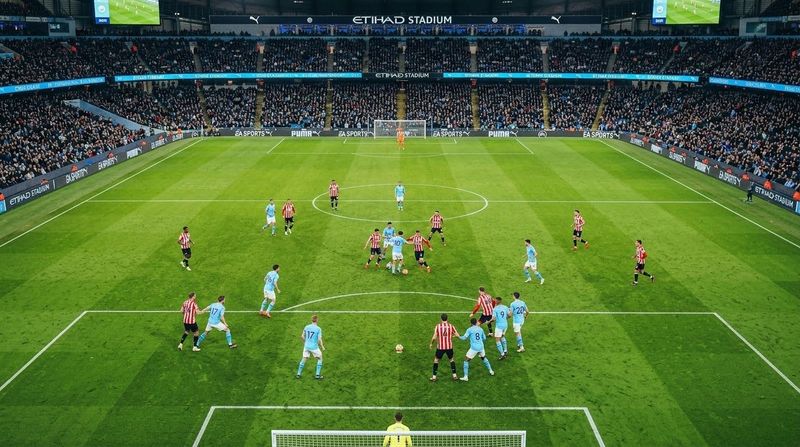
And here’s something interesting – it’s not only about running more. It’s about running smarter. Teams now compress space, stretch it, then snap it back like a rubber band. Coaches talk less about fixed positions and more about “moments.” Sounds abstract, right? But on the pitch it’s very real – a defender steps forward, a midfielder drops, and suddenly the whole shape looks new. Even the idea of control starts to feel like a kind of “1xbet 게임,” where timing, risk, and split-second decisions decide everything.
A funny contradiction appears here. The game looks more chaotic than ever… but it’s also more organized. That tension is exactly what makes modern football so fascinating to watch. So let’s break it down a bit and see where this shift is really coming from.
Pressing like a swarm of bees
You’ve probably noticed it – teams don’t wait anymore. The moment the ball is lost, three or four players jump in. It feels like a wave closing in. That’s high pressing, and it’s become a core habit for many top sides.
But it’s not just running at opponents blindly. There’s structure inside the chaos. Players angle their runs, block passing lanes, and force mistakes in specific zones. It’s almost like setting traps on the pitch. And when it works, it’s beautiful in a wild way – win the ball high, attack fast, no time for the other team to breathe.
Still, there’s a risk. Press too much and you get exposed. One long pass, and suddenly the back line is sprinting toward its own goal. Coaches accept that trade-off. Why? Because control higher up the pitch often feels worth the danger behind.
And here’s a thought – isn’t it strange that defending now starts in attack? Strikers are the first defenders. That alone shows how roles have blurred. Nothing is fixed anymore. Everyone moves, everyone reacts, and the game never really pauses.
When defenders start thinking like midfielders
Not long ago, defenders had one main job: stop goals. Simple. Now? They’re often the first playmakers. Center-backs pass under pressure like midfield pros. Some even carry the ball into midfield themselves.
You might see a fullback drift inside instead of hugging the touchline. That creates overloads in the center, giving the team extra control. It also confuses opponents. Who do you mark when positions keep changing?
This shift makes the first phase of attack much calmer than it used to be. Instead of clearing the ball long, teams build slowly, almost patiently, even when pressed. It’s a bit risky, yes, but it also pulls opponents out of shape. One wrong step from the press, and space opens like a door left ajar.
And here’s the twist – defenders now need vision, not just strength. They scan the field constantly. They decide tempo. In many ways, they start attacks more often than midfielders do. That would’ve sounded odd years ago, but now it feels normal. Football just keeps rewriting roles without asking permission.
Midfield: the real control room
If football had a brain, it would sit in the midfield. That part of the pitch controls rhythm, direction, even emotion of the match. One calm pass can slow everything down. One sharp turn can speed it up instantly.
Midfielders today don’t stay in one zone. They drift, rotate, and connect lines. Some drop deep to help build play, others push high to support attack. It’s less about “being in the middle” and more about being everywhere at once.
What’s tricky is spacing. Too close, and the team gets crowded. Too wide, and gaps appear. So midfielders constantly adjust, almost like they’re solving a moving puzzle in real time. Except there’s no pause button.
You also see more quick transitions now. Ball won in defense? Boom – three passes later, it’s near the goal. Lost in midfield? Opponents are already running at your box. There’s barely any calm zone anymore.
And still, great midfielders make it look easy. A touch here, a glance there, and suddenly everything feels under control. That’s not luck. That’s awareness built over thousands of small decisions.
Strikers who refuse to stay still
The classic striker used to wait near the box, ready to finish. That image still exists, but it’s fading. Now forwards drift wide, drop deep, or even start moves from midfield.
Why? Because standing still makes you easier to mark. Modern defenders don’t give space easily. So attackers create their own space by moving constantly. A striker might pull a center-back out of position, opening a lane for a teammate. It’s less about scoring alone and more about shaping chances.
Some forwards even act like playmakers. They link passes, press defenders, and then sprint into the box at the perfect moment. Timing matters more than position.
Of course, this can look messy. At times, nobody is where you expect them to be. A winger is in the center, a striker is near the touchline, and defenders are halfway into midfield. Strange? Yes. But it works when coordination clicks.
So what’s the takeaway from all this movement? Football has become less about fixed roles and more about shared responsibility. Everyone attacks, everyone defends, and everyone shifts shape constantly.
And maybe that’s the real change. The game feels faster, but also more connected. Players read each other like quick signals rather than strict instructions. It’s not chaos. It’s controlled motion – and when it flows, it’s something special to watch.